
Attic floors, kneewalls and rooflines
Attic & Roofline Insulation in Staten Island, NY
Seal the gaps, bring the attic to depth, and stop the top floor from turning into an oven every July.
- Free on-site estimates
- Written quote showing foam type, thickness and R-value for each area
- Moisture, leaks and flood history checked before anything is covered
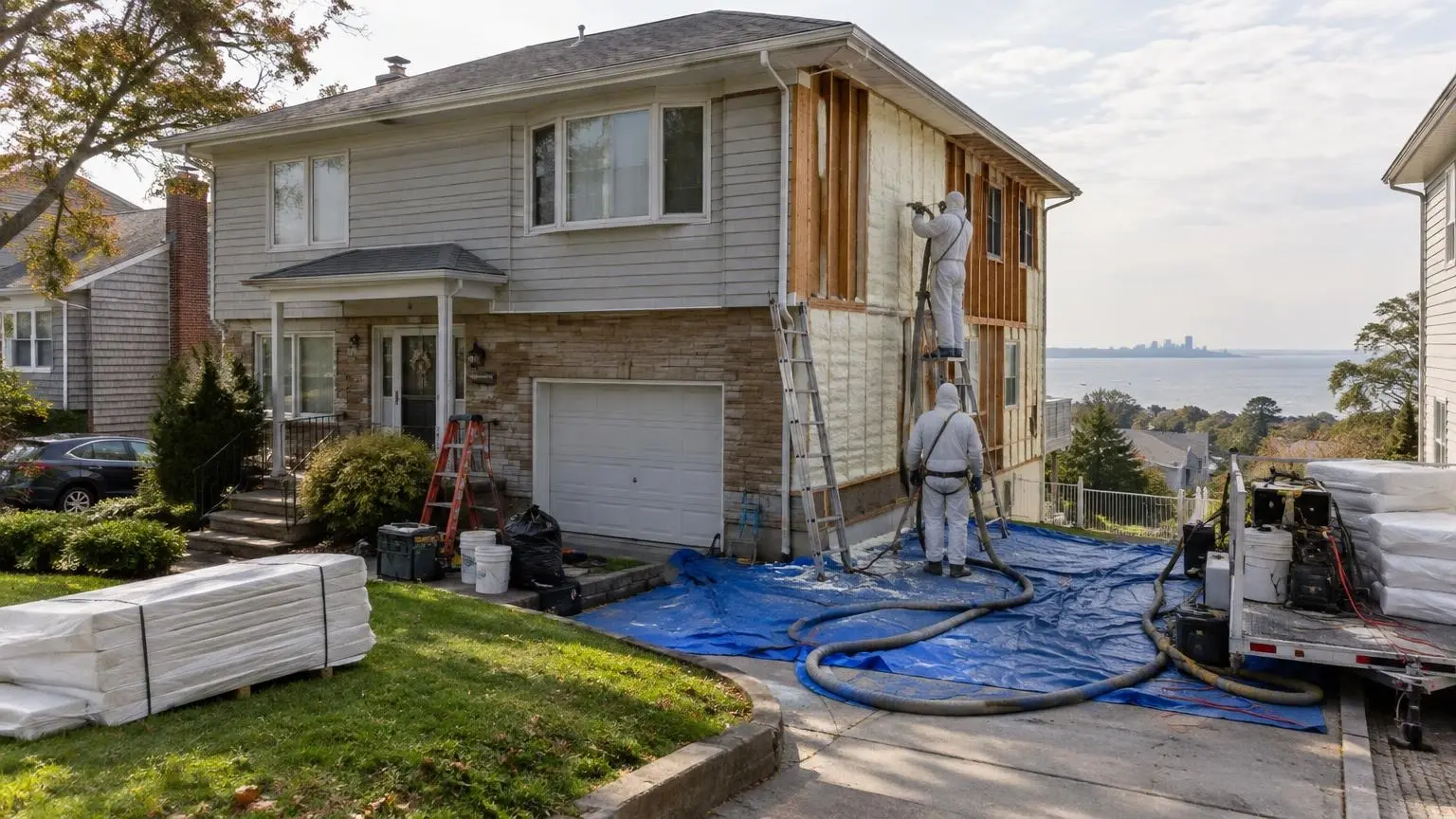
Why the Top Floor Gets So Hot
Attic and roofline insulation is where most Staten Island houses gain the most. In summer, sun on the roof heats the attic well past the outdoor temperature, and that heat soaks through a thin layer of insulation into the bedrooms below. In winter, warm air rises through gaps around pipes, wires, flues, recessed lights and the hatch, and leaves through the roof. We fix both by sealing the leaks first and then adding insulation to a real target.
What the target is
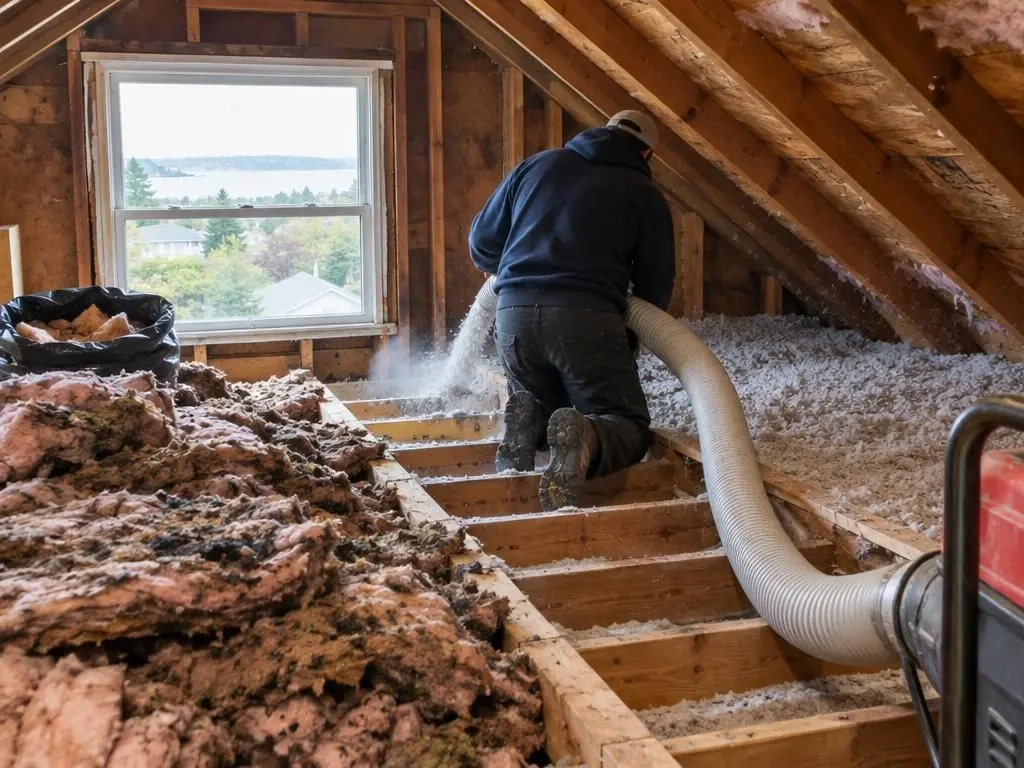
The 2025 New York City Energy Conservation Code uses Climate Zone 4A for the city and lists R-49 for ceilings. That is roughly 14 to 16 inches of blown-in cellulose or fiberglass, depending on the product. Many Staten Island attics we see hold a few inches of old batts that have been crushed by storage or disturbed by cable and alarm installers over the years. Where that is the case, adding insulation without sealing first leaves the biggest heat leaks in place.
Air sealing comes first
The leaks that matter most are the ones you cannot see from the hatch: top plates of interior walls, the chase around a chimney or plumbing stack, soffits over kitchen cabinets, bath fan housings, and the open tops of wall cavities in older houses with balloon framing. We seal these with foam, caulk and blocking, weatherstrip and insulate the hatch or pull-down stair, and make sure bath fans vent outside, not into the attic. The same code that sets R-49 also caps whole-house air leakage at 3.0 air changes per hour at 50 pascals for new work, which shows how much weight it puts on sealing.
Floor or roofline?
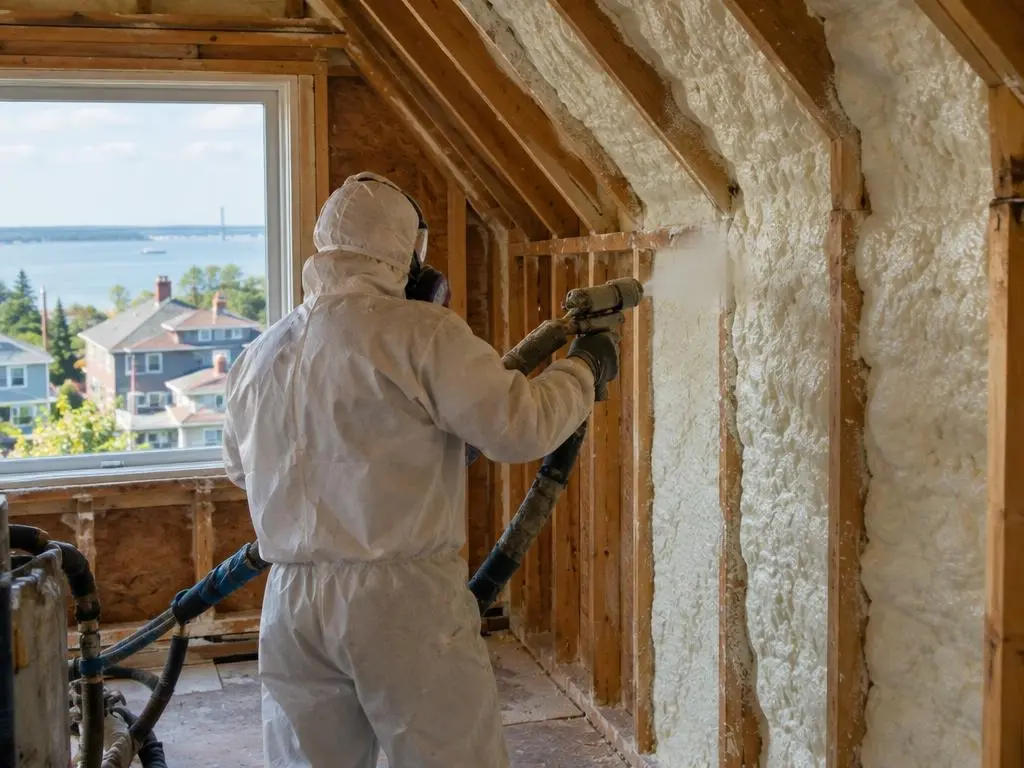
Most attics are insulated on the floor, with the roof vented above. That is usually the cheapest way to reach R-49. Some houses are better off with the insulation moved up to the underside of the roof deck. That makes sense when the attic holds ductwork or an air handler, when the attic is being finished, or when the ceiling follows the roof with no attic at all, as in cathedral ceilings, dormers and many converted attics. In those spots, closed-cell spray foam reaches a high R-value in the depth of the rafters and seals the deck in one step.
Kneewalls and half stories
Cape-style houses and expanded attics have short kneewalls with small triangular attic spaces behind them. Those walls are often insulated poorly or not at all, and the floor behind them opens straight into the floor framing below. We insulate and air seal the kneewall, block the floor cavities, and treat the sloped ceiling above, so the upstairs room is not hot in July and cold in January.
Humidity and ventilation
With July and August dew points averaging close to 62F in the Central Park normals, attic moisture is a summer issue as well as a winter one. A vented attic needs clear soffit-to-ridge airflow, so we keep baffles in place at the eaves. An unvented roofline assembly needs the right foam thickness to keep the roof deck warm enough to avoid condensation. We explain which approach fits your house before you decide.
We look at the whole attic, measure what is there, and put the plan and price in writing. Get a free estimate
Attic Work We Do
The pieces that go into an attic or roofline job.
Attic air sealing
Top plates, chases, stacks, light housings and the hatch sealed before new insulation goes in.
Blown-in to depth
Cellulose or fiberglass blown across the attic floor to the R-value on the quote.
Roof deck spray foam
Closed-cell or open-cell foam under the roof for attics with ducts, finished attics and cathedral ceilings.
Kneewalls and half stories
Insulation and blocking for the walls and floors around upstairs rooms in capes and expanded attics.
Hatch and stair covers
Insulated, weatherstripped covers for attic hatches and pull-down stairs.
Published Attic Insulation Costs
| Job | Range and source |
|---|---|
| Attic insulation, average job | $1,000 to $2,700, about $1,800 average (HomeGuide) |
| Air sealing | $350 to $3,000 (HomeGuide) |
| Blown-in, attic | $0.90 to $2.40 per sq ft (HomeGuide attic guide) |
| Spray foam on the attic floor | $1,100 to $6,800 (HomeGuide) |
| Spray foam on the roof deck | $1,500 to $9,000 (HomeGuide) |
| Spray foam, attic (existing home) | $2,500 to $12,000 (Fixr) |
| Old insulation removal | $1 to $2 per sq ft (HomeGuide) |
These ranges come from HomeGuide's January 2026 attic guide and Fixr's 2025 spray foam guide, both national. The size of the attic, how much sealing it needs, access through the hatch and any removal decide your cost, and the written estimate we give you after the visit is the price.
How an Attic Job Goes
1. Inspect
We measure existing depth, look for leaks, mold, rodents and bath fans venting into the attic.
2. Quote
Air sealing, insulation type, depth, R-value and price are written out.
3. Seal
Gaps and chases are closed and baffles set at the eaves.
4. Insulate
Loose fill is blown to depth, or foam is sprayed on the roofline, as quoted.
5. Check
We show you the depth markers and the finished work.
Attic & Roofline Insulation Questions
How much insulation should a Staten Island attic have?
The NYC Energy Conservation Code lists R-49 for ceilings in Climate Zone 4A, which applies to new work and renovations. For an existing attic that is a sensible target. We write the planned R-value and depth on the quote.
Should I insulate the attic floor or the roof?
The floor, in most houses, because it costs less. The roofline makes sense when the attic has ducts or equipment, is being finished, or when there is no attic above a sloped ceiling. We explain which fits your house.
Will attic insulation help with a hot upstairs in summer?
Yes, along with air sealing. Most of the heat in a top floor comes from a hot attic through thin insulation and gaps. Sealing and adding depth slows that, and your air conditioner has less to fight.
Do I need to remove the old insulation first?
Not always. Dry, clean insulation can stay under new material. Insulation that is wet, moldy, full of rodent waste or blocking the air sealing work should come out. We tell you which applies.
Attic & Roofline Insulation Service Areas
- Spray Foam Insulation in Staten Island, NY
- Spray Foam Insulation in St. George, NY
- Spray Foam Insulation in Stapleton, NY
- Spray Foam Insulation in Port Richmond, NY
- Spray Foam Insulation in West Brighton, NY
- Spray Foam Insulation in Westerleigh, NY
- Spray Foam Insulation in Willowbrook, NY
- Spray Foam Insulation in New Springville, NY
- Spray Foam Insulation in Todt Hill, NY
- Spray Foam Insulation in Dongan Hills, NY
- Spray Foam Insulation in South Beach, NY
- Spray Foam Insulation in Midland Beach, NY
- Spray Foam Insulation in New Dorp, NY
- Spray Foam Insulation in Oakwood, NY
- Spray Foam Insulation in Great Kills, NY
- Spray Foam Insulation in Eltingville, NY
- Spray Foam Insulation in Annadale, NY
- Spray Foam Insulation in Arden Heights, NY
- Spray Foam Insulation in Prince's Bay, NY
- Spray Foam Insulation in Rossville, NY
- Spray Foam Insulation in Charleston, NY
- Spray Foam Insulation in Tottenville, NY
Get an Attic & Roofline Insulation Estimate
Hot top floor or cold upstairs? We will check the attic and send a written plan.