
Closed-cell and open-cell foam
Spray Foam Insulation in Staten Island, NY
Dense closed-cell where water and cold meet the house, lighter open-cell where air sealing and quiet matter most.
- Free on-site estimates
- Written quote showing foam type, thickness and R-value for each area
- Moisture, leaks and flood history checked before anything is covered
One Layer That Seals and Insulates
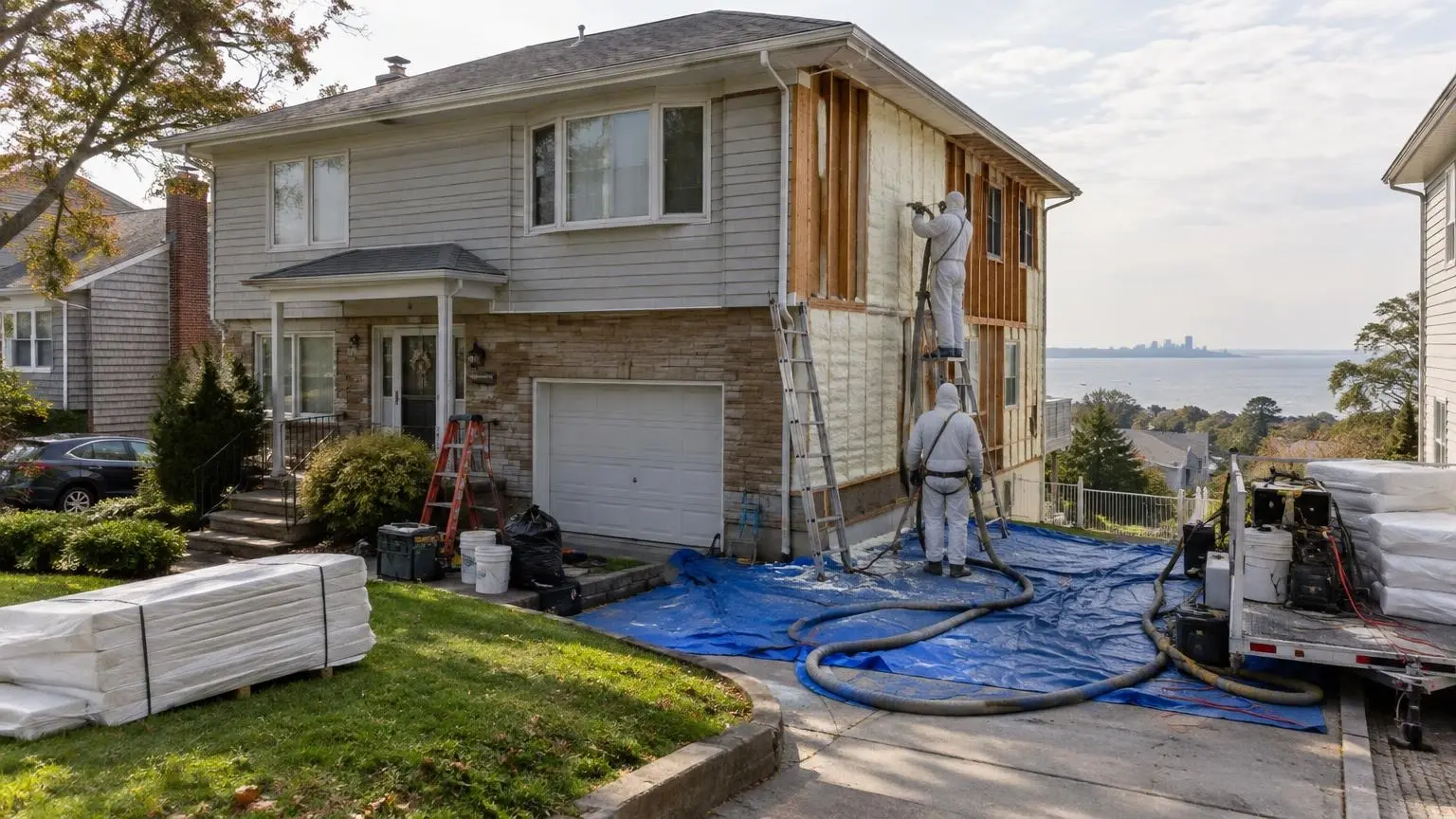
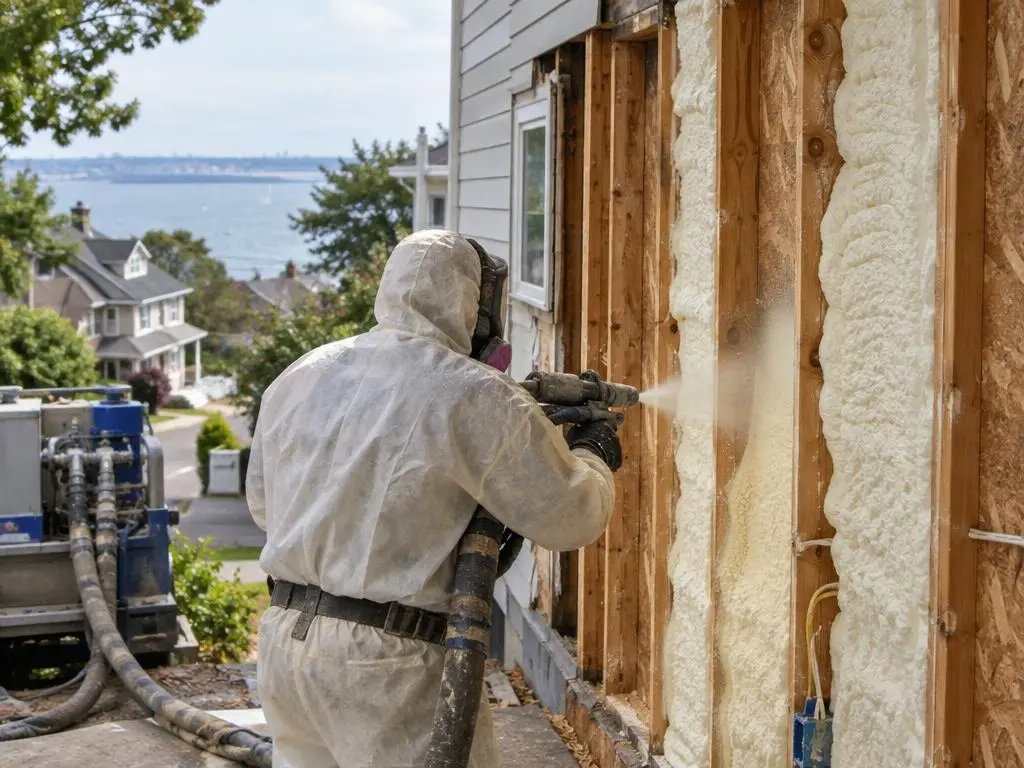
Spray foam insulation goes on as a liquid, expands into gaps and cures in place, so a single layer both insulates and stops air. On Staten Island that air seal matters in two seasons: it keeps humid summer air out of the house and keeps heated air in during the winter. We spray two kinds of foam, and picking between them for each surface is the first decision on every job.
Closed cell vs open cell
Closed-cell foam cures hard and dense. HomeGuide rates it at R-5 to R-7 per inch. At normal thickness it slows water vapor, takes on very little water and adds stiffness to the surface it is sprayed on. Open-cell foam is soft and light, swells to fill odd-shaped cavities and comes in at R-3.5 to R-3.7 per inch. It seals air well and muffles sound, but vapor passes through it, so the wall or roof assembly needs a plan for moisture.
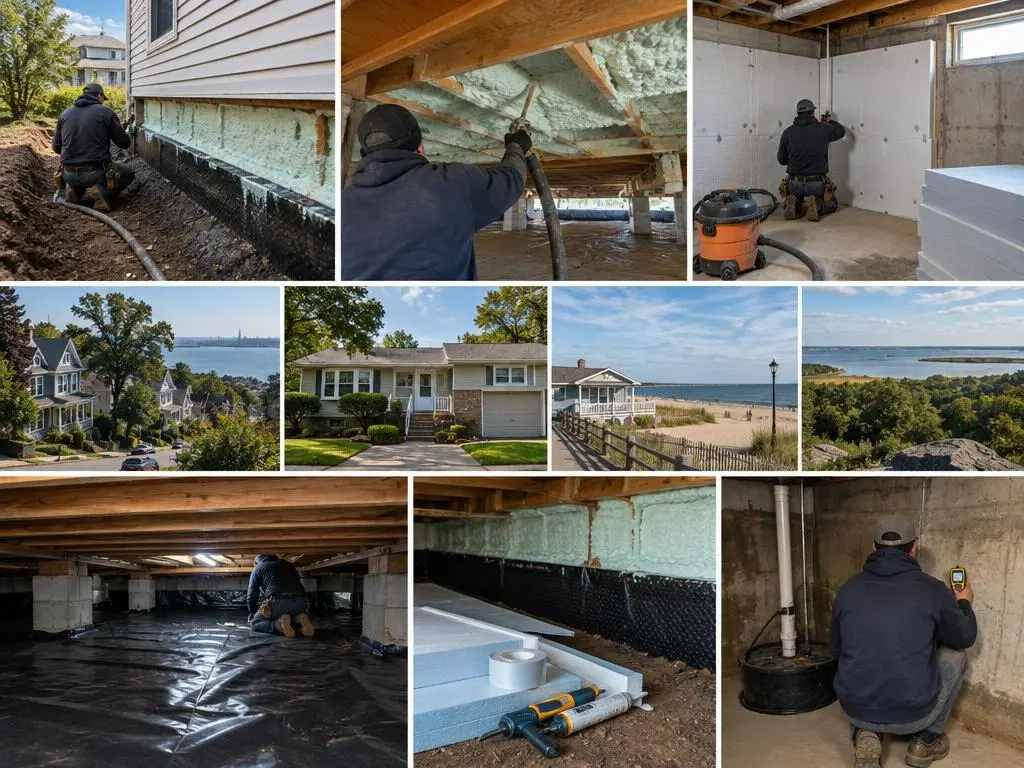
Those properties steer the choice. Closed-cell goes where cold, damp or flood-prone surfaces meet the house: rim joists, basement and crawl space walls, the underside of roof decks in cathedral ceilings and dormers, and the floors of rooms over unheated garages. Open-cell suits interior walls, above-grade exterior walls in a renovation, many attic rooflines and walls between rooms where noise is the main complaint.
Code targets in New York City
The 2025 NYC Energy Conservation Code uses Climate Zone 4A for the whole city. Its residential table lists R-49 ceilings; R-30 wood-frame walls, or R-20 plus R-5 continuous, or R-13 plus R-10 continuous; R-30 floors; and R-15 continuous or R-19 cavity for basement and crawl space walls. Closed-cell reaches high R-values in a few inches, which is useful in 2x4 walls and shallow rafters common in older Staten Island houses. We size the thickness to the target and write both on the quote.
Foam in flood-prone houses
Much of the East and South Shore sits low. After Hurricane Sandy, many lower levels near the water were gutted and rebuilt. FEMA's Technical Bulletin 2 allows only Class 4 and Class 5 flood damage-resistant materials below the base flood elevation in a special flood hazard area, meaning materials that can withstand at least 72 hours in floodwater with only cosmetic repair. If your house is in a mapped flood zone, we confirm what is allowed in the space before recommending foam or any other insulation there. Above the flood elevation, the usual rules apply.
Where foam is not the answer
Foam does not fix a leak. A roof, window or plumbing leak has to be repaired first, or foam will hide the damage while the wood rots. Foam also should not cover old knob-and-tube wiring or vermiculite that might contain asbestos until those are checked. And on an open attic floor, sealing the gaps and blowing in cellulose to depth usually costs less than foam. If we see any of these on the visit, we tell you before pricing.
Preparing for spray day
The spraying itself is quick; the prep takes longer. We cover floors and belongings, mask outlets and windows and set up ventilation. HomeGuide advises staying out for 24 hours or more while the foam cures. Foam has a working temperature range for both the material and the surface, so for a cold attic or crawl space in January we plan heat or a milder day. Once cured, foam does not settle, so the thickness we install is the thickness you keep.
Tell us which spaces you are thinking about and what you have noticed. We will look, explain where foam earns its cost, and give you a written price. Get a free estimate
Where We Spray
The places foam goes most often in Staten Island houses, and the type we usually choose.
Closed-cell spray foam
Dense foam at R-5 to R-7 per inch that slows vapor; our pick for rim joists, foundation walls, crawl spaces and damp or flood-prone areas.
Open-cell spray foam
Lighter foam at R-3.5 to R-3.7 per inch that seals air and cuts noise; used in interior walls, above-grade cavities and many rooflines.
Rim joists
The band of framing on top of the foundation, sealed and insulated in one pass to stop drafts around the whole house.
Cathedral ceilings and dormers
Closed-cell under the roof deck where there is no attic or no room for a vent channel.
Rooms over garages
Floors of bedrooms and dens above an unheated garage, sealed against cold and fumes.
Open walls during renovation
Stud bays in a gut renovation or rebuild, sized to the Zone 4A wall targets.
Published Spray Foam Insulation Costs
| Job | Range and source |
|---|---|
| Spray foam, installed | $1.50 to $5.00 per sq ft (HomeGuide) |
| Open-cell / closed-cell | $1.50 to $3.50 / $3.00 to $5.00 per sq ft (HomeGuide) |
| About 1,000 sq ft | $1,500 to $5,000 (HomeGuide); $3,150 to $7,500 existing home (Fixr) |
| Existing walls / new construction | $3.15 to $7.50 / $2.75 to $6.50 per sq ft (Fixr) |
| All exterior walls | $4,000 to $10,000 (HomeGuide) |
| Whole house | $8,000 to $20,000 (HomeGuide); $10,000 to $30,000 (Fixr) |
| Typical job minimum | $1,000 to $2,000+ (HomeGuide) |
National ranges from HomeGuide's 2026 spray foam guide and Fixr's 2025 guide, shown to help you budget. Your foam type, thickness, access and prep set the real number, and the amount on the written estimate we hand you is the price you pay.
How a Foam Job Goes
1. Visit and measure
We inspect each space, check for leaks, damp or flood-damaged wood, old wiring and vermiculite, and measure.
2. Written quote
Each area lists foam type, thickness, R-value and price, plus any covering the code requires.
3. Prep and protect
Floors and belongings are covered, openings masked and ventilation set up.
4. Spray in passes
Foam goes on in layers to the planned thickness and is trimmed where needed.
5. Clean up and walk through
We clean the area, show you the work and confirm when the space is ready to use.
Why Choose Us for Spray Foam Insulation
Foam only where it pays
If loose fill or air sealing does the job for less, we say so on the quote.
Thickness on paper
Every area shows its planned thickness and R-value.
Flood questions first
Lower levels near the water get checked for past flooding and current rules before we recommend a material.
Spray Foam Insulation Questions
Is closed-cell worth the extra cost?
For rim joists, basement and crawl space walls, damp or flood-prone areas and shallow roof rafters, usually yes, because it holds more R-value per inch and slows vapor. In interior walls and deep above-grade cavities, open-cell often does the job for less. Where both could work, we price both.
What are the disadvantages of a spray foam roof deck?
Foam under the roof deck hides the sheathing, so a roof leak is harder to spot. It costs more than insulating the attic floor, and it brings the attic inside the conditioned space, which changes how ventilation and moisture are handled. It is worth it for cathedral ceilings or attics with ductwork, less so for a plain open attic.
How long do we have to stay out?
HomeGuide's advice is at least 24 hours while the foam cures. For a detached garage or a crawl space sealed off from the house it may affect you less. We confirm the timing for your job.
Does spray foam need to be covered?
Usually. Foam plastic generally needs a thermal barrier such as drywall between it and living space, and certain attics and crawl spaces use an ignition barrier coating instead. We include the covering in the plan.
Who manufactures spray foam insulation?
Several national companies make spray foam systems, and installers buy them as two-part kits. What matters more for you is that the product is rated for the space and installed at the thickness written on your quote. We tell you which product we plan to use.
Spray Foam Insulation Service Areas
- Spray Foam Insulation in Staten Island, NY
- Spray Foam Insulation in St. George, NY
- Spray Foam Insulation in Stapleton, NY
- Spray Foam Insulation in Port Richmond, NY
- Spray Foam Insulation in West Brighton, NY
- Spray Foam Insulation in Westerleigh, NY
- Spray Foam Insulation in Willowbrook, NY
- Spray Foam Insulation in New Springville, NY
- Spray Foam Insulation in Todt Hill, NY
- Spray Foam Insulation in Dongan Hills, NY
- Spray Foam Insulation in South Beach, NY
- Spray Foam Insulation in Midland Beach, NY
- Spray Foam Insulation in New Dorp, NY
- Spray Foam Insulation in Oakwood, NY
- Spray Foam Insulation in Great Kills, NY
- Spray Foam Insulation in Eltingville, NY
- Spray Foam Insulation in Annadale, NY
- Spray Foam Insulation in Arden Heights, NY
- Spray Foam Insulation in Prince's Bay, NY
- Spray Foam Insulation in Rossville, NY
- Spray Foam Insulation in Charleston, NY
- Spray Foam Insulation in Tottenville, NY
Get a Spray Foam Insulation Estimate
Tell us the spaces and what you have noticed. We will send a written foam plan and price.