
Cellulose and fiberglass loose fill
Blown-In Insulation in Staten Island, NY
The low-cost way to bring an attic floor to R-49, done after the leaks are sealed.
- Free on-site estimates
- Written quote showing foam type, thickness and R-value for each area
- Moisture, leaks and flood history checked before anything is covered
Depth for Less
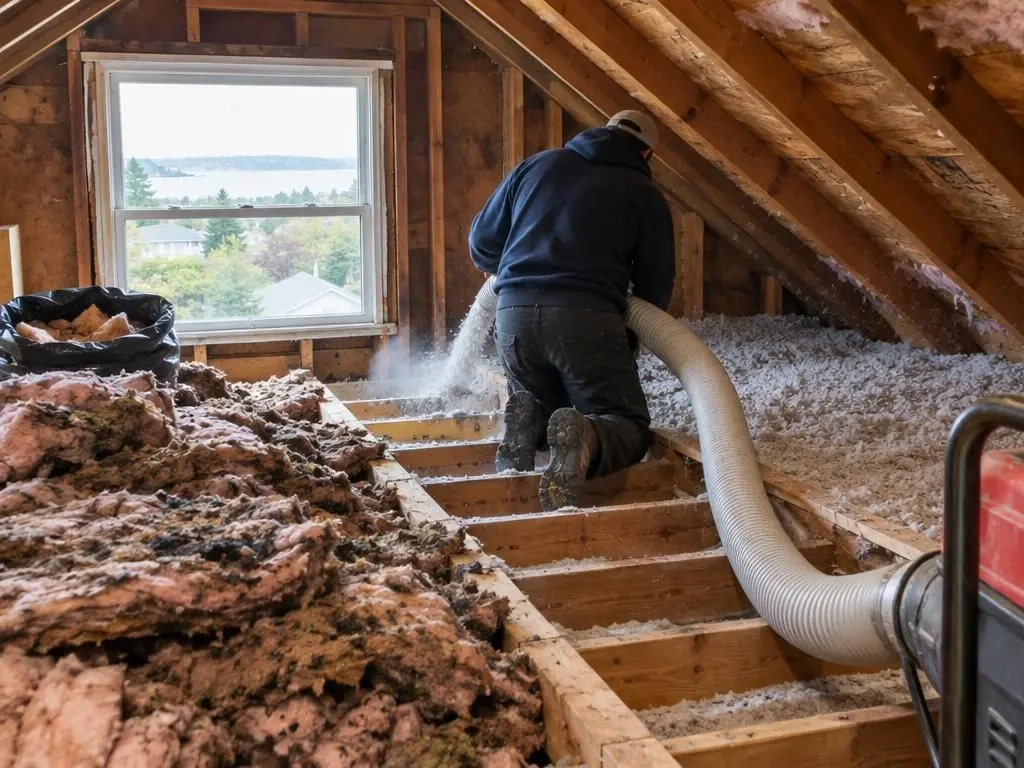
Blown-in insulation is loose cellulose or fiberglass sprayed through a hose into an attic or a closed cavity. It fills around joists, wiring and odd shapes, and on an open attic floor it is usually the cheapest way to reach a high R-value. We pair it with air sealing, because loose fill slows heat but does not stop air moving through it.
Cellulose or fiberglass
Cellulose is made mostly from recycled paper treated for fire and pests. It is dense, settles a little after install, and is the usual choice for dense-packing closed walls. Fiberglass loose fill is lighter, does not absorb water, and needs a bit more depth for the same R-value. Fixr lists blown fiberglass at $1.65 to $2.60 per square foot and cellulose at $1.75 to $3.80. Both work well in an attic when the floor below has been sealed.
Reaching code depth
The 2025 NYC Energy Conservation Code lists R-49 for ceilings in Climate Zone 4A. On many Staten Island attic floors that means adding 10 inches or more on top of what is there. We install depth markers so you can see the installed depth, and we write the target R-value on the quote. Before blowing, we put baffles at the eaves so the new insulation does not block soffit vents and cut off attic airflow.
Seal first
The heat that escapes a house in winter mostly rides on air leaking into the attic through gaps around plumbing stacks, chimney chases, wiring, light fixtures and the tops of interior walls. In summer the same gaps let hot attic air into the house. We seal these with foam, caulk and blocking before any loose fill goes down, and we cover recessed lights that are not rated for contact with insulation.
When blown-in is not the answer
Loose fill does not work on a sloped ceiling with no attic, against a basement wall, or anywhere it could get wet. In those places spray foam or rigid board is the better tool. In attics with a lot of ductwork, we may suggest moving the insulation up to the roofline instead. We explain why on the quote.
Over old insulation
Blown-in can usually go right on top of dry, clean insulation. If the old material is wet, moldy, contaminated by rodents or looks like vermiculite, it needs attention first. Vermiculite may contain asbestos and must be tested before anyone disturbs it.
Tell us about your attic and we will send a written plan with depth and price. Get a free estimate
Blown-In Work
Where loose fill goes and what comes with it.
Attic floor top-ups
Loose fill added over existing insulation to reach the target depth.
New attic insulation
Full depth on an attic floor after old material is removed.
Eave baffles
Vent chutes installed so new insulation does not block soffit airflow.
Dense-pack walls
Cellulose blown into closed wall cavities at high density.
Published Blown-In Insulation Costs
| Job | Range and source |
|---|---|
| Blown-in, per sq ft | $1.00 to $2.80 (HomeGuide); $1.65 to $3.80 (Fixr) |
| Attic | $900 to $3,600 (HomeGuide); $1,750 to $5,500 for about 1,500 sq ft (Fixr) |
| Exterior walls | $1,900 to $7,800, $1.10 to $3.70 per sq ft (HomeGuide); $2,000 to $4,000 (Fixr) |
| Dense-pack cellulose | $1.60 to $4.20 per sq ft (HomeGuide) |
| Fiberglass / cellulose | $1.65 to $2.60 / $1.75 to $3.80 per sq ft (Fixr) |
| Typical job | $800 to $3,000 (HomeGuide); $3,000 to $7,000 (Fixr) |
HomeGuide (November 2025) and Fixr (August 2025) publish these national numbers. Attic size, depth, air sealing and any removal shape the final figure, and your written estimate from us is the price.
How a Blown-In Job Goes
1. Measure
We check existing depth and condition and find the air leaks.
2. Quote
Material, depth, R-value, sealing and price are written out.
3. Seal and baffle
Leaks are closed and eave baffles installed.
4. Blow to depth
Loose fill goes down evenly to the markers.
Blown-In Insulation Questions
Is blown-in or spray foam better for an attic?
For an open attic floor, sealing the gaps and blowing in loose fill usually costs less and works well. Spray foam is better for rooflines, cathedral ceilings and tight spots. We price whichever fits, or both.
Does blown-in insulation settle?
Cellulose settles slightly after install, so we blow to a depth that allows for it. Fiberglass settles less. Depth markers show what was installed.
Can new insulation go over the old?
Usually yes, if the old insulation is dry and clean. Wet, moldy or rodent-damaged insulation, or anything that looks like vermiculite, needs to be handled first.
Blown-In Insulation Service Areas
- Spray Foam Insulation in Staten Island, NY
- Spray Foam Insulation in St. George, NY
- Spray Foam Insulation in Stapleton, NY
- Spray Foam Insulation in Port Richmond, NY
- Spray Foam Insulation in West Brighton, NY
- Spray Foam Insulation in Westerleigh, NY
- Spray Foam Insulation in Willowbrook, NY
- Spray Foam Insulation in New Springville, NY
- Spray Foam Insulation in Todt Hill, NY
- Spray Foam Insulation in Dongan Hills, NY
- Spray Foam Insulation in South Beach, NY
- Spray Foam Insulation in Midland Beach, NY
- Spray Foam Insulation in New Dorp, NY
- Spray Foam Insulation in Oakwood, NY
- Spray Foam Insulation in Great Kills, NY
- Spray Foam Insulation in Eltingville, NY
- Spray Foam Insulation in Annadale, NY
- Spray Foam Insulation in Arden Heights, NY
- Spray Foam Insulation in Prince's Bay, NY
- Spray Foam Insulation in Rossville, NY
- Spray Foam Insulation in Charleston, NY
- Spray Foam Insulation in Tottenville, NY
Get a Blown-In Insulation Estimate
We will measure your attic and send the depth and price in writing.